We are less than one week away from Careers in Professional Services, military veteran, Emma Jude talks to us about what life is like for her to work for PwC — one of the companies that sit within what’s known as the ‘Big 4’. You will meet all four companies and others if you are registered to attend this year’s event on 27 September 2023.

Emma is a senior manager within the Defence and Home Affairs Enterprise Transformation Consulting team at PwC. She is the day-to-day lead on a variety of consulting projects, helping Defence clients to transform aspects of their organisation. While her projects are very varied, she often supports teams who are delivering programme and change management services.

What was your background before joining PwC?

I left the British Army in 2021 after 11 years of service. I left as a Major, having just completed sub-unit command with 1st Military Working Dog Regiment. My original technical trade in the Army was a Veterinary Officer, however I spent most of my time in Staff and Command (rather than clinical) roles.

What made you consider a career in professional services?

I loved problem-solving and wanted to work broadly across Defence and other government sectors.

Why did you choose PwC specifically?

I was able to speak to a lot of individuals at PwC before I joined. I was really impressed with how collegiate, passionate and knowledgeable PwC-ers were. It was definitely the people and purpose of the organisation that made me want to work here after leaving the Forces – and I haven’t been disappointed. I love working here!

How do you feel your skills from the Armed Forces community converted across to your role?

There were so many ‘soft’ skills I had developed in the Army that helped me transition into my role in PwC. For instance, the leadership and management training I was given by the Army, and the experience I had in leading teams was invaluable. My experiences of moving roles regularly in the Army and having to quickly get to grips with new ‘briefs’ also enabled me to be comfortable with uncertainty and new situations. The way we are trained to break problems down in the Army, not least through our operational estimate process, has also been really helpful.

What are your positives to the role and working for your employer?

I love the variety of my work within PwC. I feel energised by working with motivated teams and clients who have a strong purpose in what they want to deliver. PwC has allowed me to complete a wide range of both internal and external training programmes, which has helped me to rapidly develop as a consultant.

Did you experience any challenges?

I still miss the Army culture and people, but by working in Defence consulting I am able to work with serving individuals and MOD civil servants, which is great. It also took a bit of adjustment to go from owning problems to advising on them. I have overcome this by challenging myself to really think about where I can add most value to clients based on my skills and experience.

What tips would you share with anyone considering a role within the Big 4

Network, network, network. This will ensure you understand what the role(s) you are looking at entail (including travel requirements etc), and will help you pick up the terminology you need to transfer your skills and experience into ‘civvy speak’.

Back yourself! The people we are, and the situations we have been exposed to in the Forces, allows us to adapt and be successful in a variety of business environments.

Would you welcome a conversation with an employment advisor?

Contact us at the Forces Employment Charity where a member of the team will be in touch with you.

I loved my time in the Army. I loved the people, I loved the job, and I loved the sense of purpose. But once I began doubting the overall output and direction of the organisation, I questioned whether it was something I wanted to dedicate my life to. I surveyed the years ahead, and saw the long, slow career progression stretching out into the far distance… And for what? Old for my rank owing to a career before the military, I reached an inflection point: it was time for a change.

But a change in what direction? There followed six months or so of fairly intensive reflection and pestering friends of friends for coffee chats, until I settled on management consulting. This resulted from doing a couple of practice case studies at an insight day – and enjoying them. When I was put in touch with an ex-Guardsman at Kearney Middle East, it seemed like the golden ticket: management consulting at a top global firm, in a fascinating, low-tax part of the world, with a heavy defence focus. It ticked every box for me and after nearly eight years in the Army, I took the plunge.

Just over six months later in September 2022, I found myself representing Kearney at an insight event co-hosted by the Forces Employment Charity at the Cavalry and Guards Club in London. The aim: to extend that same “golden ticket” to UK Armed Forces veterans for a role with Kearney’s MEA Aerospace, Defence, and Security practice, based in Dubai.

About Kearney

Kearney is a top global management consulting firm of 3,600 people, based in 40 countries around the world. We serve more than three-quarters of the Fortune Global 500 with curiosity, boldness, generosity, solidarity, passion, and genuine commitment to client success. In the middle east we operate a unique collaborative model that links consultant and project teams to full-time security and defence advisors, with a broader global network of subject matter experts providing insights from leading countries. We work with all the major GCC defence players as their trusted advisers, across the defence and security spectrum from strategy and policy through operations to enablers.

What we offer

We are hoping to recruit individuals into consulting roles at the Senior Analyst/ Associate level, and offer an attractive package: first, a pivot into a prestigious and intellectually stimulating career as a management consultant with a top global firm; second, the opportunity to continue to work in the defence industry and apply the knowledge and experience gained in the military, whilst developing a new set of skills; and third, the chance to live in a fun, buzzing, and low-tax part of the world that is undergoing a regional transformation unprecedented in its scope and ambition.

Would you like to know more?

If you are currently serving with or have recently left the Forces, have a track record of professional and academic excellence, and are interested in applying for a role with Kearney Middle East, keep an eye on our Executive jobs board for the latest opportunities.


And stay tuned for future events.

In the lead-up to one of our flagship events, Careers in Professional Services, military veteran, Sidharth (Sid) Nair talks to us about what life is like for him to work for PwC — one of the companies that sit within what’s known as the ‘Big 4’. You will meet all four companies and others if you are registered to attend this year’s event on 27 September 2023.

Sid is currently part of the Cyber Risk Advisory team at PwC. His role is about collaborating with client organisations to assess their cybersecurity risks and maturity levels. He does this by identifying potential threats and vulnerabilities and then suggesting specific cybersecurity controls to help manage these risks effectively.

What was your background before joining PwC?

I started my career with an exhilarating seven-year stint as a Combat Helicopter Pilot in the Indian Air Force. My entry into the cybersecurity world was through an Indian startup that focuses on managed cybersecurity services. To further enrich my skill set, I pursued an MBA at the University of Glasgow in 2022. All these experiences converged and led me to this exciting juncture at PwC.

What made you consider a career in professional services?

Transitioning from the Indian Air Force brought me to a crossroads where I wanted to leverage my hard-earned skills and training in a new domain. After gathering insights from industry experts and delving into research, cyber risk emerged as a promising arena. The dynamic landscape of consulting, with its diverse challenges, strongly resonated with my curiosity and eagerness to continuously evolve.

Why did you choose PwC specifically?

My connection with PwC ignited during my MBA dissertation, which focused on cybersecurity. While reaching out for research interviews, one of the first and foremost positive responses I received was from a PwC director who leads a key cybersecurity proposition. His prompt response and further interactions illuminated the open and inclusive culture at PwC. It felt like a place where I could not only grow but thrive.

How do you feel your skills from the Armed Forces community converted across to your role?

Interestingly, the experiences I have gained in the Armed Forces have seamlessly transitioned into my current role in cyber risk. Although the context shifted from physical and operational risks to cyber risks, the fundamental principles of tiered defence remained consistent. Identifying threats, understanding vulnerabilities, managing risks, and building robust defences—all these aspects provided a solid foundation for this exciting journey.

What are your positives to the role and working for your employer?

On a personal note, a profound sense of purpose drives me in my professional journey. While my prior role as a military pilot was deeply fulfilling, cybersecurity consulting now offers me a clear sense of purpose and ample avenues for growth. Even in my relatively short time here at PwC, I’ve encountered unwavering support and guidance from experienced colleagues and peers. Their recognition of my diverse skillsets and experiences has been incredibly encouraging.

Did you experience any challenges?

Cybersecurity is a unique domain with its technical intricacies perfectly complementing the non-technical facets, wherein collaborating with colleagues who’ve been deeply rooted in this domain since the start of their careers can occasionally seem overwhelming. However, with clear goals, a thirst for knowledge, and a supportive network of colleagues invested in my growth, I am managing to navigate these hurdles.

What tips would you share with anyone considering a role within the Big 4

My general advice would be to research deeply to develop a clear idea of your future course. While military backgrounds hold weight, the real essence lies in aligning your military experiences with the role you’re aiming for. Tailoring your knowledge, experience, and skill sets to match the job description showcases your suitability and enables you to be clear and concise in your job interviews.

As a veteran who transitioned to a thriving sector and then onto a different country, I want to underline the potential within military individuals and say that nothing is beyond us.

I’d like to wish you all fair winds and blue skies – and good luck for a rewarding career ahead.

Would you welcome a conversation with an employment advisor?

Contact us at the Forces Employment Charity where a member of the team will be in touch with you.

This month, we spoke to three Forces Employment Charity staff members to shed light on the importance of upskilling and training for future employment and to understand the support available for veterans and Service leavers.

What is upskilling?

Upskilling broadly means expanding and improving your knowledge and increasing your skills.

It is best to approach upskilling and training in a targeted way. Decide what you are aiming for – whether it is a specific role or entry into a specific industry – and then target your learning in pursuit of a particular outcome rather than upskilling across a range of areas, which can lead to a shallower understanding of each area.

The benefits of training and upskilling

Many military personnel undervalue themselves and struggle to articulate or translate their military skills to civilian employment. This can cause some of the Armed Forces community to be underemployed, meaning they are not using their skills or experience to optimum potential.

Training and upskilling allow you to make the most of your skills and experience and help you build a sustainable career.

Before committing to courses and paying for qualifications, do your research and find out if you are eligible for financial support to help you pursue your career goals.

ELCAS

There are opportunities for Service leavers and veterans to gain accredited qualifications through ELCAS – the Enhanced Learning Credits Administration Service.

All three military services provide Enhanced Learning Credits, a Ministry of Defence Scheme which gives financial support for qualifications at Level 3 or above for Service leavers and veterans, all listed on the ELCAS website.

Exact details on how much financial support you can claim towards qualifications vary depending on your length of service and if you have registered for ELCs – the full details of which are outlined here. However, broadly speaking, if you served between six to eight years, you could be eligible to make three claims of £1000 per claim. Those who served over eight years could be eligible for £2000 per claim.

Eligibility

To access ELCAS, you must have registered for it whilst in service (most Service personnel are enrolled automatically). You can claim your credits within five years of leaving the military (if you left on or after 1 April 2016). You can read the full eligibility rules here.

It is essential to follow the ELCAS process on the website and allow enough time before the start of your chosen course to claim funding – ELCAS advises a minimum of 25 working days before your course start date/registration date for those in service and slightly longer for veterans as the process is being completed remotely. The Single Service Resettlement Officer might only check this email once or twice weekly. Read the procedure for how to make a claim here.

What’s on offer?

Whether you’re looking for a career change or to upskill, the ELCAS has a range of learning providers, from established universities, further education institutions and private learning providers, with a wide variety of part and full-time courses. You could be looking for a qualification in nursing or finance, law or engineering – courses and qualifications are available across a range of vocations and subjects. You can browse using their advanced search here.

Annette Berry, Employment Lead for the Forces Employment Charity’s Military Women programme, explains that using your Enhanced Learning Credits can help with employability and your future career and can provide an accredited qualification to evidence your knowledge and skills to an employer formally. Enhanced Learning Credits can also help if you’re looking to change career or become self-employed, with accredited qualifications giving you a base to build upon.

The courses are flexible, whether you want to do part or full-time, distance or in-person learning. It is worth considering how you learn best and what learning style will most benefit you. If you struggle with self-motivation whilst working at home, perhaps an in-person course would suit you better. If you’re juggling busy work and family life, a part-time remote course might work best.

A key factor to remember is that you need to be motivated to complete the qualifications – don’t throw away your hard-earned credits on a course or qualification you can’t complete. You have five years after leaving the forces to use your credits, so start planning when and how to use them to benefit you most.

Before committing to a course, it is worth checking with a Forces Employment Charity Employment Consultant, as they have up-to-date knowledge of the careers market, which will help you get into the role or career you’re seeking. They may be able to advise other, cheaper alternatives, freeing up your ELCs for another qualification. Moreover, if you are looking at information technology or tech, first register with TechVets to see what is on offer for free before using your Credits.

For complete and up-to-date information on ELCs and how to claim them, you can contact ELCAS directly on 0330 0564202 or visit their website.

Success across multiple industries and career paths

Leanne Bonner, a Forces Employment Charity Employment Consultant, explains that she has helped veterans obtain grants for various training and qualifications for careers in the renewable sector, security services, gas engineering, graphic design and HGV driving. She explains how Employment Consultants listen to veterans, understand what they want from their careers, and construct a plan for getting there.

Leanne supported one veteran to gain a grant to start his own leather-carving business. The veteran says, ‘Leanne worked very hard and managed to get my business plan and cash flows all to fit in the required funding template we had to use and thankfully was mostly successful due in most part to Leanne’s perseverance, hard work and her faith in my business idea and products I design and hand make… Leanne kept a cool, professional head and made it happen for me, for which I am truly grateful. I now, at last, have a good workshop set up and am on track with several orders of leather work and have also managed to obtain four retail outlets that would like to stock some of my products.’

TechVets

If you are interested in information technology careers and looking for free training and upskilling, TechVets is the best place to start. TechVets is a Forces Employment Charity programme which provides a bridge for service leavers, veterans, reservists and their families, allowing them to pursue information technology careers.

TechVets provides free training, much of which can be conducted virtually, enabling veterans to access opportunities that may otherwise be prohibitively expensive or unavailable elsewhere. The programme partners with 20 companies to provide training covering a wide range of areas, including UX and UI design, Digital Marketing and eCommerce, Cyber Security, Data Analytics and much more. Training partners include Google, Splunk, Pega, Immersive Labs and Fortinet.

The importance of upskilling in tech

Roles are becoming increasingly digital, making it critical for the Forces community to keep developing their digital skills, even at a base level. The ability to navigate technology, stay abreast of trends, and have specialist areas of expertise will enable you to stand out when applying for jobs.

Even if you are not looking for a role or career change, upskilling and training can provide life lessons. For example, TechVets offers free training for how to be secure online – skills that apply to your every day, regardless of your career aspirations.

Online community

TechVets also has an online community with over 4,000 members, some of whom have already found tech roles. This network allows members to ask questions, gain advice, connect with like-minded people, and discover others’ pathways into particular careers.

The community offers support by challenging cyber and tech myths and facilitating a space where members can ask critical questions – what certifications do you need? What are the career paths for particular areas of cyber and tech? What salary should you expect? In addition, the community provides pastoral support during difficult periods, such as when changing careers, leaving the military or returning to work [https://www.forcesemployment.org.uk/news/returning-to-work-when-youre-50/]. It also enables members to contact and learn from veterans within the TechVets community who are experienced technology practitioners.

TechVets also provides employment support by connecting members to industry professionals, running industry events, providing a CV distribution service, and providing a platform where members can upskill to reach their target career goals.

What areas are popular or in demand in the current climate?

Deciding where to upskill and what training to do can be a challenge. TechVets’ community can provide advice, and you can browse what TechVets offers following registration.

James Murphy, Director of TechVets, highlights some in-demand areas in the current cyber and tech climate that you might wish to consider.

People management
One of technology’s biggest demands currently is for people who are tech-aware or have tech knowledge and can manage people. Often, individuals don’t want to move into management because they enjoy creative or technical work, which can often be forsaken at management or strategic levels. This has led to a considerable gap within tech, creating a need for candidates who can manage and lead teams. Training and upskilling of so-called ‘soft’ skills would be highly beneficial for individuals interested in leadership and are a considerable asset to tech and cyber organisations.

Cloud knowledge
Cloud knowledge is another key area with high demand for candidates. Many organisations favour storing files and applications on the cloud, as it means they don’t have to manage physical servers to store data – this can all be stored in external cloud servers managed worldwide. It also means that data can be accessed from any device from different locations. The increase in remote working and access has led to an increased requirement for cloud environments and, as such, an increased need for cloud architects and those who understand how to build cloud environments.

Data analysts and data scientists
Data analysts and data scientists are also sought after in today’s climate. The world’s biggest problems are being tackled by data analysts and data scientists, who try to make sense of data to find solutions. Individuals who know how to design, plan and collect vast quantities of data and how to use tools to draw insights and accurate information from data can help inform decision-makers and policy-makers. One prime example of how data was vital in assisting with a worldwide problem was during COVID-19. Findings derived from data were used to help predict virus trends and hot spots and were used to reduce risks. For example, insights from data highlighted which groups were more at risk from the virus. Data was also used to help society return to ‘normal’ after the pandemic.[1]

Programming
Despite the rise of generative AI and automation, there is still a need for individuals who can design, build, implement, troubleshoot and maintain computer programmes.

Cyber security
As we do more online, from shopping and banking to storing, processing and transferring confidential data, the risk of cyber-attacks increases. And with technology continually advancing, digital attacks have likewise become more sophisticated. From an organisational perspective, cyber security is integral for keeping intellectual property and confidential information safe and ensuring that its staff and clients are protected. Data breaches can be hugely costly and decrease clients’ trust, negatively impacting business. Consequently, cyber security and individuals who know how to protect online systems and programs are in huge demand.

If you’re a veteran, reservist, service leaver or family member interested in training and upskilling in the information technology and cyber sphere, sign up to TechVets for free today.

What are you waiting for?

Register for free with the Forces Employment Charity to be assigned an Employment Consultant who will support you through your employment journey, from training and upskilling to job-hunting, applications and interviews.


[1] https://www.historyofdatascience.com/the-role-of-data-science-during-the-covid-19-pandemic/, accessed 09/08/23

Have you ever wondered what it would be like to work in the professional services sector within one of the Big 4? September sees the Forces Employment Charity (FEC) hold one of its flagship events, Careers in Professional Services at PwC’s offices on the London Embankment on Wednesday 27 September 2023. We spoke to Sarah Eble to find out what it’s like to work for PwC as a military spouse.

Sarah is a manager within the personal tax compliance team and is responsible for preparing tax returns for high-net-worth individuals and trusts. She also provides tax advice for her clients on all matters of personal tax for individuals living in the UK and offshore.

Sarah, tell us about your background

I began my career in tax after leaving university. I then left work to raise my daughters and held a variety of roles while following my husband around the UK and Europe. I was a bursar, a PA, I trained as a teacher and worked in the charitable sector among other things.

What made you consider a career in professional services and why PwC?

After trying a number of different roles I decided to go back to what I was familiar with. I started back with a smaller firm and re-took my professional qualifications to refresh my learning and ensure I was relevant. Because I had started out with one of the Big 4 I knew that was where I enjoyed working so when PwC approached me I jumped at the opportunity.

I liked what PwC stood for. A couple of my oldest friends who work for large solicitors firms said that they were a good firm to work with which helped me decide to work for them.

How do you feel your skills from the Armed Forces community converted across to your role?

As a military spouse I have learnt to be flexible, independent, resilient, organised and think on my feet. I have met a lot of people and had to walk into many rooms where I knew no one and start a conversation. All of these things have taught me skills that are essential to the work I do today.

What are the personal positives to your role and working for your employer?

PwC has a very supportive community. Their working hours are flexible, allowing you to fit your work and home life together, but in a sensible way. The work is challenging and there are always new opportunities if you want to take them.

Did you come across any challenges?

I found my self-imposed imposter syndrome was a challenge at the beginning but with time I have realised that all experience is valuable.

What tips would you share with anyone considering a role within the Big 4?

There are plenty of roles available so do some research and see which ones suit your strengths and experience. Reach out and talk to people within the organisation. Don’t close a door on yourself.

There are skills you will have learned, as part of the Armed Forces community that are invaluable and can be applied to so many different roles. Don’t sell yourself short.

Find more information on the Careers in Professional Services event on 27 September 2023. 

Please note: This event is currently over-subscribed and a waiting list is in operation.

At the Forces Employment Charity, behind every phone call with a client, every specific piece of job advice, and every successful job placement, is a member of staff who empathises and values those who have served and the military families that support them. Each staff member has their own story to tell – how they got here, what attracted them to their current role, what makes them tick, and crucially, their motivation to support veterans, spouses, partners and dependants.

Continuing our monthly interviews with staff across departments such as employment advisors and operations we’re interviewing Lee Johnston, Families Programme Coordinator.

Read on to learn about Lee’s career, motivations and advice to military spouses.

Hi Lee, thanks for joining us today!

Thanks for asking me!

You are very welcome. To start with, what do you do at the Forces Employment Charity?

I am the Programme Coordinator for the Families Programme at the Forces Employment Charity.

Great – can you tell me about your career up until you started here?

Just before I started at the Forces Employment Charity, I worked in learning and development. I was an e-learning advisor within a naval and military base, I would help people gain their ECDL qualification (European Computer Driving Licence – an IT literacy qualification) as well as their functional skills in Maths and English. I was really fortunate to be able to do that at two different bases, I worked at Faslane for a few years and then at Yeovilton. It was at Yeovilton that I was promoted and moved from e-learning advisor to a learning and development advisor. I helped Serving personnel with clarity on their five year plan. This five year plan would include looking at what types of higher education and plans they could put in place for when the time came to leave. I would also support if they were hoping for more career progression within the Forces through more education.

How did you get from Learning Advisor to a Programme Coordinator at the Forces Employment Charity?

When my husband secured a new posting in Plymouth we all moved down to be with him. I hoped that that it would be third time lucky and that I would be able to slot into a Learning and Development Centre down here, especially with Plymouth being a bigger base. Unfortunately after exhausting a few avenues there was no position for me. So I had to leave my job in Yeovilton and became unemployed. And it was really disappointing as I had just started my level five coaching! So I tapped into my local Department of Work and Pensions, as I had been advised to, and looked at every avenue that I could. But it just felt like I was never going to find anything that I wanted to do, the only thing that I really would have loved was finding a role within the military community.

One day a friend who worked at a military charity called and told me she had just had “a fantastic chat with this amazing charity, the RFEA (Forces Employment Charity before the combination with the Officers Association in May 2022) and they are looking for someone to start on a new programme called the Families Programme that they’re launching soon”. She went on to say she thought I should apply and sent me the link. I did the usual military spouse thing, where we kind of look at it going “I can’t do that. No, I don’t have the skills!” But when I sat back and re-evaluated and wrote down everything they required and compared it to my skills, I realised that it all aligned. At this point it was 10pm and I remember thinking “who better to navigate and support a spouse out of work than a spouse out of work herself? Surely I’ve got all the personal attributes to be able to help someone else who is in the same position that I’m in right now.” So I put my application in. I was really fortunate to secure an interview and didn’t think for a minute that I would even have a look in but I ended up securing the role that week! I had already counted myself out so to get the role was just an indescribable feeling and it has been five years since!

Wow, what a story and quite a journey, especially as it was the day of the deadline!

It was only by chance that this contact had this conversation with someone from the charity about this programme. It was really lovely that she thought of me and thought I would be good at this. I had volunteered in the community before and had a lot of other roles, for example, I volunteered for FAFSA committee up in Scotland, which was the family and friends of deployed units and I have fundraised for the Royal Marines Charity. I have sort of been in the military family space and community but never physically worked for an organisation that was directly supporting them, and I thought maybe this is my time and I took my chance, and I was really fortunate to get it.

With all this in mind do you think volunteering is important for spouses?

Absolutely. It is a hugely beneficial thing to do for spouses who can’t find work or who are looking for work. I have had the opportunity to work with some incredible people who absolutely exceed in what they do for military families. Volunteering also gives people the ability to build up skill sets and build relationships with people in that network. Because you’re speaking to different organisations and you are dealing with people from all over the community.

Do you think volunteering is useful for specific future roles or just as a whole?

I think volunteering is helpful as a whole. It doesn’t have to be for one specific industry. There are lots of skills you can build up, for example it is perfect if you just want to build up your networking or your communication skills. We do both of these things on a daily basis and people don’t recognise that these are skills that we can transfer to a majority of the roles! So whether you go into it for something to do or you volunteer for a specific set of skills, I think volunteering as a whole can have a positive impact on anyone. It is definitely something that should be considered, even if you only have an hour a week.

What advice do you have for spouses who are job searching?

Think about what it is you actually want to achieve. If you don’t know yet, have a chat with an organisation like us who can help you. The reason I say this is because when I was job hunting it felt like a full-time job. I felt like I was constantly hitting brick walls and it was becoming quite onerous on my mental health because of the knockbacks.

Be patient. Take some time out for yourself and write down and focus on what it is you want to achieve. Set some goals. Even small goals can make you feel like you are achieving so much. Write down your achievements! A common thing for spouses and partners is a lack of understanding of the skillsets we actually have. We are a highly skilled group of people, we just need to understand what it is we have. Sometimes it’s easier to focus on the things we haven’t got rather than the things we have, so write down your skills! It can help spark ideas.

Don’t ever lose faith in yourself. On the families programme we can help keep you motivated and keep you on the right track.

Lastly, you can achieve anything you want! I never thought I would be in the place I am in now – the first advisor on a well-established programme.

Amazing tips Lee! With all that in mind, when is a good time to start job hunting?

Summer is a great time! There is a misconception that summer is a bad time because no one is hiring, but all that happens is it just slows down due to summer leave. So the most important thing to do is remain patient and be vigilant. People tend to slow the search down due to that summer period which means a little less competition! On top of all that, it’s also the time when some employers start looking at the past few months and start evaluating where they need support. Then there is the hidden jobs market.

Can you tell me more about the hidden jobs market?

Of course! So these jobs aren’t on local jobs boards but are found through your network. For example you move to a new patch and through a quick chat with someone you find out about an opportunity. They might introduce you to the employer or recommend you for the role and suddenly you have a connection or a job.

That’s so great – it’s all about the network! Moving on to more about you, what is your favourite part of your role?

I love every part of my job – the highs and the lows! But the most enjoyable part is the lightbulb moment when people realise what they have to give. I absolutely love it. When clients start to recognise what they have in terms of skills and when they start to see a plan and the light end of the tunnel, that eureka moment, that’s my favourite part.

What energizes and motivates you?

Being able to help people! That’s why I do what I do. But also the fact I don’t know who I’m going to meet every day. How I support people is different for every person because they have different needs which means no day is ever the same. I am motivated to give back to this community and provide something I didn’t have. Also my team is incredible!

Finally, what is the most interesting role you supported a client to obtain?

I supported someone from a project manager to a florist!

Find out more about the Families Programme and get to know Sarah Peñaluna advisor on the Programme here

Helping students adapt to new environments and find their career paths


For many young people, navigating the educational landscape and planning for their future career can be a challenging journey. But, when you add the complexity of being part of a military family the challenges can become even more daunting. Ruby, a resilient and determined 18 year old provides us with a glimpse into her experiences as a military child and how she has found support and guidance through dedicated support from the Forces Employment Charity.

A life of movement

Growing up in a military family means a life of constant change. Ruby’s father’s career in the military led to a childhood characterised by frequent relocations across various countries. “I have lived all over the place as my dad is in the military. I have been to seven or eight schools in my lifetime in different countries,” Ruby shares. This lifestyle exposed Ruby to a range of cultures and experiences, but it also brought about unique challenges in terms of education and transition.

“Cyprus was the best one!” Ruby says. During her time in Cyprus, she attended a small school in Akrotiri, a British Overseas Territory on the island. Despite the geographical distance from other military bases, Ruby found a sense of camaraderie among her peers. “We were all in the same boat. And we all got there at the same time. Because it was such a small school, it was a lot easier to make friends. We all understood each other,” Ruby recalls.

The educational journey

Changes and adaptations have marked Ruby’s educational journey. “I have been to three or four primary schools and two/three secondary schools,” she states. These transitions and her family’s unique circumstances brought about the need for specialised support.

Kelly, Education and Skills Liaison, has been instrumental in Ruby’s journey. She points out the challenges Ruby faced as a military family member seeking consistency in her education. Kelly goes on to shed even more light on the need for comprehensive transition support for military children and young people, like Ruby. “There is now a progression mentor at Ruby’s college, I got in contact and now Ruby has someone to talk to if anything is on her mind. But it took us intervening to really get moving. The real heartache is that we had to intervene. The support should have been there before.”

Military transitions and career aspirations

Kelly’s involvement with Ruby began when she registered for support with the EM3 Veterans and Families programme. Ruby’s situation requires a lengthy commute to her college due to the type of courses she wants to continue pursuing. “Since moving, I need to travel quite far to get to college, a train, a ferry and a bus!”

The journey wasn’t just about the physical commute but also about finding the right educational path. Ruby started off with BTECs, which differ from A levels, but when she moved colleges around her only did A levels. Her determination to follow her desired career and not jump around too much required strategic planning. “The right solution was to keep her at her current college, but now there is just that financial implication that’s not been budgeted for,” Kelly remarks.

Empowering aspirations

Kelly’s role extended beyond logistical support. She assisted Ruby in creating a strong CV, exploring university options that aligned with her interests in law and psychology, and investigating potential summer placements to enhance her skill set. The support also addressed the mental and emotional challenges Ruby faced. “Kelly has been incredibly helpful. She’s helped me with research and pointed me in the right direction, so I’m not worrying about a million things at once. She’s helped me break things down step by step and is so supportive with everything,” Ruby acknowledges.

Ruby’s advice

Ruby’s advice to other young people facing similar situations is clear: “Even if you are only thinking about registering and not sure about it, go for it anyway because the Forces Employment Charity is so helpful in many ways. Anybody could do with someone who helps ease their worries or thoughts and anything they have – academics or job opportunities.”

Ruby’s journey underscores the importance of tailored support for military families as they navigate educational transitions and career aspirations. With the right resources, mentorship, and determination, young individuals like Ruby can overcome challenges and reach their full potential.

Whether you’ve decided on your dream job or you haven’t got the first idea what you want to do (yet) we can help. From creating CVs to interview coaching and university applications to linking with mentors our team is here to support you. For more information and to register for the EM3 Veterans and Families Programme click here.

The EM3 Veterans and Families programme is part funded by the European Social Fund.

European Social Fund logo

At the Forces Employment Charity, behind every phone call with a client, every specific piece of job advice, and every successful job placement, is a member of staff who empathises and values those who have served and the military families that support them. Each staff member has their own story to tell – how they got here, what attracted them to their current role, what makes them tick, and crucially, their motivation to support veterans, spouses, partners and dependants.

Continuing our monthly interviews with staff across departments such as employment advisors and operations we’re interviewing Kevin Grist, Manager of the Veterans’ Support Programme.

Read on to learn about Kevin’s career, motivations and advice to veterans.

Can you tell me about your role at the Forces Employment Charity?

I am currently the manager for the Veterans’ Support Programme, so I manage 11 Advisors around the UK.

Eleven consultants! How do you enjoy managing that many people?

The way we work is fairly unique. I know that hybrid working has now become the norm, but with the 100% home-based work that we do, it can be difficult to manage a team of people and to try to get across information. But it is great, I love what I do. The great thing about this job is that I learn something new every single day. Every day is a school day. I am learning how to manage a new programme all the time because we are a new programme. I am incredibly lucky to have 11 brilliant advisors that are so talented, experienced and passionate, it’s brilliant!

Can you go into a little more detail about what exactly the Veterans’ Support team do?

We cater for veterans and clients who are still serving. We support people with anything employment based which could be something as simple as a CV review, to a full career re-brand or re-shuffle. Anything that is employment based, my team will support with. On my team, we work very closely with the Royal British Legion (RBL) and build relationships with RBL managers and case workers across the country. The Veterans’ Support team are also specialists in funding and getting funding for our clients. The roles of advisors on both my team and the Ex-Forces Employment Programme are quite similar. I think around 50% of the role is giving advice and guidance on employment but the other 50% can be anything for motivation and coaching to keeping people going. We have all been in the job-seeking process at some point, we’ve all had to find work and I doubt anybody thinks ‘what a fantastic and easy experience this is!’ Sometimes you need a friend and somebody to lean on when you are having a bad time when looking for work. That is a lot of what we do, we give our clients not just employment support but somebody to lean on during difficult times and when they need a kind ear.

It sounds positive but also like there can be challenges?

Yes, there can be some. We are a new programme and that has been an interesting journey. As a manager, I am there to be the sounding board when my team come across barriers. It is challenging navigating these barriers but can be incredibly rewarding too – everyone has their highs and lows wherever they work, but I believe we are lucky to work for a charity that cares about people and gives people autonomy to do their jobs to the best of their ability.

How do you keep your team motivated?

Communication is key. We have weekly meetings, but I also speak to my team individually so that everybody has at least an hour every week. My approach is to be open and ensure people know that they can contact me at any time. Before I was a team manager I was an advisor and that means the team know they can call me and know I can help because I’ve been in their shoes. If you are managed by someone who has done the same job previously, I think you automatically have a little bit more respect than if they had no idea about what you do. I am a massive advocate for having a strong work-life balance. For me it is always about making sure that people do their job to the very best of their ability but knowing that they need to take the time for their own life. Having fun is important and people need to be included in the decision making – so I don’t think there is one specific answer, I think there are a lot of things. I have always tried to manage the way I like to be managed, so it is as simple as that!

What energises and motivates you every day?

I am incredibly lucky; I adore my home life and I really do enjoy what I do at Forces Employment Charity. Every morning, it’s great to know that I have the freedom to go out and work with the people on my team who go on to help other people. The fact that I work for a charity that gives back to other people, gives me motivation. To know that in some small way, I work to make a difference to somebody somewhere. As a manager, I am responsible for my teams well-being and professional development and that drives me! Another thing is being able to work from home. It is wonderful, I love that I can be around my cats and listen to the backstreet boys. Work-life balance is key for me and I always say this to my team, at the end of the day no matter what time it is, if you can look in the mirror and say, “I’ve done a brilliant job today, I’ve done everything I need to do and more”, close your laptop, switch your phone off and you’ve had a good day. You do the job to the very best of your ability and then you go and enjoy your life. I try not to make life too complicated, and a simple life is a happy life.

What did you do before you joined the Forces Employment Charity?

I worked for the NHS in IT and Networking and then I turned 30 and decided it is time for me to do something interesting. I decided to go to China where I taught and managed at International Schools. I was only going to do it for six months but that turned into five years! There were some fantastic benefits of that, firstly, I got to see China which is an amazing country. I got to immerse myself and work in Southeast Asia and I have seen so much of the world over there. But most importantly, I met my future wife Melanie, who I get married to in a month’s time. We met the first month we were in China! So essentially, I travelled all the way to China to meet a girl from Newcastle. They all said it would never last but 18 years later we are still together! When I came back to the UK, I wanted to do something to make a difference and that meant working for charities. Over the years, before I came to the Forces Employment Charity, I spent my time working on programmes around the country helping mostly people with either long-term unemployment or disabilities and then I’ve transitioned now to the Armed Forces. I have always felt comfortable working for charities – every penny that is raised goes back to the charity and that is why I never shied away from that since returning from China.

Great story! What led you to this career and what is it about this job that appeals to you?

When I moved to the Forces Employment Charity it just seemed like a natural move for me. I know somebody who worked for CTP as a CTP assist advisor, and it gave me a real taste of what it was like to work here. I waited for two years for a position to open because we were a much smaller charity back then, so I kept my eyes open and one day this position became available. When I looked into the charity it had an excellent track record of supporting veterans but also had a great ethos when it came to their own employees. I could also see there was the ability to progress within the charity, it took me a while, but I got there in the end. I have been here for five years now, and I am still proud to work for the charity. I know we have been through change (from RFEA to Forces Employment Charity), but I think that at this moment in time, there is nowhere else I would rather be, and considering my role managing this new programme, it has been a brilliant journey.

What are some of your hopes for the charity when looking into the future?

For the longest time, the charity was internally promoted as a silent charity. It was almost like a badge of honour, saying that we don’t go out there crowing about our achievements but that has obviously changed as the RFEA combined with the Officers’ Association bringing about the Forces Employment Charity. One of the greatest things we have in this charity is the quality of its people and its ability to give a quality service. On previous programmes I have worked on, even for some charities, it is about output, throughput, what are your results and it can feel a bit like a factory churning out products. This charity has never been that way, we give a very high-quality service to our people, and I believe that is what we will continue to do. Invest in our people and as a by-product of investing in our people, we ensure that our clients are looked after in the best possible way. There is plenty of scope for us to continue to grow!

What advice would you give to a veteran who has lost confidence?

I would say “don’t feel like you are alone in this” because sometimes people think that they are the only person in the world who has lost confidence. Because of the military mentality, they have this feeling that they must be strong and that they cannot show weakness. Therefore a lack of confidence is something to be ashamed of and that is total nonsense because we are all people at the end of the day!

When people are transitioning from the military to the civilian world there is an awful lot of change that they must cope with. Change is scary irrespective of your background and who you are, people always find change, to some extent, to be something that triggers them. We are here at the Forces Employment Charity to assist with confidence and motivation because it can sometimes be difficult. Often when somebody has newly left the Armed Forces, it is a complete career change which means new training and all sorts of new things they must get used to. Regardless of how long they have been out of the military, some veterans find it difficult to settle into the civilian world and can lose sight of their own self-confidence. To get somebody to believe in themselves is not an overnight fix but at the Forces Employment Charity we not only give employment advice but help people see their strengths and if used in the right way have a successful career.

Knowing that you’re not alone in your thoughts gives you strength because I think most of us, if you have confidence issues or mental health issues, you assume you are the only one who feels that way and that is just not the case. You can come out of the other side and have really fulfilling lives and careers. I think fear itself stops people from taking a risk and I think sometimes people stick with the role they’ve got because it is the safe option no matter how unhappy they are. Taking a risk to move might be something that you tend to think negatively of but there are so many opportunities. If you make change for the right reason, then you can go on to live better and more fulfilling lives. One of the things that I used to hear a lot is how wonderful it is to speak to somebody who listens and to speak to somebody who has the time to listen, it makes a huge difference to just be kind.

That is said across all the programmes, just having someone to talk to can be so beneficial. When you look back at the feedback, from the Families Programme, for example, it’s all about the appreciation clients feel for Advisors listening to them and the fact that they listened helped boost their confidence. As you say, this is such a fantastic resource for the Forces community that they must take advantage of it.

I have never been in the Armed Forces but there is such a caring mentality in the community. People just want to help each other. I tend to find that the answers people are looking for are already within them and as an Advisor it is about pulling that information they already have, out of them and helping them believe in themselves. A big part of what we do is gently pointing clients in the right direction.

What is something that you learned at work recently?

I was in a meeting recently and one of my team said, “did you know that beekeeping is a really growing trend for veterans because the buzzing of the bees naturally calms people with PTSD?”. I was very surprised!

What is the most interesting role you have supported a client to obtain?

One of the best successes I ever had was getting somebody funding. He had serious complex PTSD and all sorts of issues; he couldn’t work anywhere inside. We got him funded to be an outdoor training specialist, and it took him a year but now he teaches people to kayak and sail! Another one of my clients, who still gets in contact, was a prison officer but didn’t want to be a prison officer. He had a very caring nature and together we managed to get him to work at a care home working with disabled children. He has never been happier and every Christmas he always says, “Hey Kev, how’s it going, I am still loving my job.” He went from being spat at, and dealing with some tough situations to becoming a carer. It just goes to show that big changes to completely different careers are possible, no matter your background.

To find out more about the Veterans’ Support Programme click here


Women have served in our Armed Forces for more than a century, applying for the same roles as men and enjoying fulfilling careers. Yet when they leave military life, it can take them nine months* or longer to find employment, and the employment gap between them and their male counterparts remains acute.

This year marked the third year of our Women into Employment event series; events designed to focus on the employment needs of women from across the Armed Forces community. We bring employers and career specialists together with job seekers and those interested in reviewing their employment potential to explore new job opportunities and how to become not just job ready but confident in approaching the job search process.

Chloe Mackay, Deputy Chief Executive at the Forces Employment Charity, says: “Women into Employment has grown in popularity, year on year, with the experiences of some attendees having been truly transformational.”

In May, we ran a pre-conference networking evening hosted by Deloitte and the employment conference itself in June, was kindly hosted by J.P. Morgan. The volume and range of employers involved demonstrates their commitment and interest in hiring female talent across the Armed Forces community; JP Morgan, Centrica, Sky, Barclays, SubSea7, Deloitte, BNY Mellon, DAS, KPMG, CBRE and Smiths were just some of the employers involved in supporting this great initiative. As Laura Blair, Head of Programme at Centrica Ex-Forces Pathway said: “Our ambition is to hire from across the Armed Forces Community.”


Women into Employment Conference 2023Both events provided female job seekers and those interested in evaluating their employment potential with an opportunity to network and talk face-to-face about job opportunities and careers and to gain insights into the wider civilian jobs landscape.

Over 50 speakers, employers and industry experts contributed their time, expertise and energy to make each event successful. For the conference, we had an amazing Chair in Sky news broadcaster, Kimberly Leonard. She expertly managed a packed agenda and kept everyone on track and on time and with over one hundred women from across the Armed Forces Community in attendance, it was a day to remember.

“I am so glad I attended this event. 57 speakers and access to so much knowledge and positivity. I left the programme buoyed up about my chances of finding a job that works for my family and me. Excellent networking opportunities also.” – Saskia Hart, attendee


Our first year of hosting Women into Employment started the conversation with employers and women from the Armed Forces community, followed in 2022 with an event focused on identifying and overcoming some of the challenges women face when approaching the employment market.

Our focus this June was to understand how we can best support women to ensure they are fully equipped with the tools they need to access employment opportunities successfully. The conference definitely came a long way in achieving our goal, with 83% of attendees saying they made valuable connections and found the information and expertise on offer throughout the event useful in their next steps.

Networking, and knowing how you can make your network work is an ongoing topic for us all.  We recognise how important creating and building a network is to job success. This is where the idea of a networking event to complement the conference came about. People want an opportunity to meet future employers in an informal setting – to connect, network and take conversations forward and our May did exactly that. But don’t just take our word for it.

“It was the best networking and insight event I have been to. It was extremely informative, powerful and enjoyable, and certainly empowered women.” – Vivienne Buck, attendee


Next Steps

Following the success of this year’s Women into Employment events, we will be repeating both events in 2024. If you are interested in getting involved and are committed to recruiting from the female ex-military and spouse talent pools, then we want to hear from you.


Support for Military Women

At the Forces Employment Charity, we have a range of options for support for Military Women, from our dedicated Military Women programme to our Executive Services offering. If you would like to be part of our growing network and have access to this high level of support and job opportunities, register with us today.


*A 2021 Parliamentary Defence Sub-Committee study; Protecting those who protect us: Women in the Armed Forces from Recruitment to Civilian Life, concluded:

  1. Female veterans felt their skills and experience from the Armed Forces needed to be understood by civilian employers.
  2. One in five surveyed said it took them nine months or longer to find employment after leaving the military.

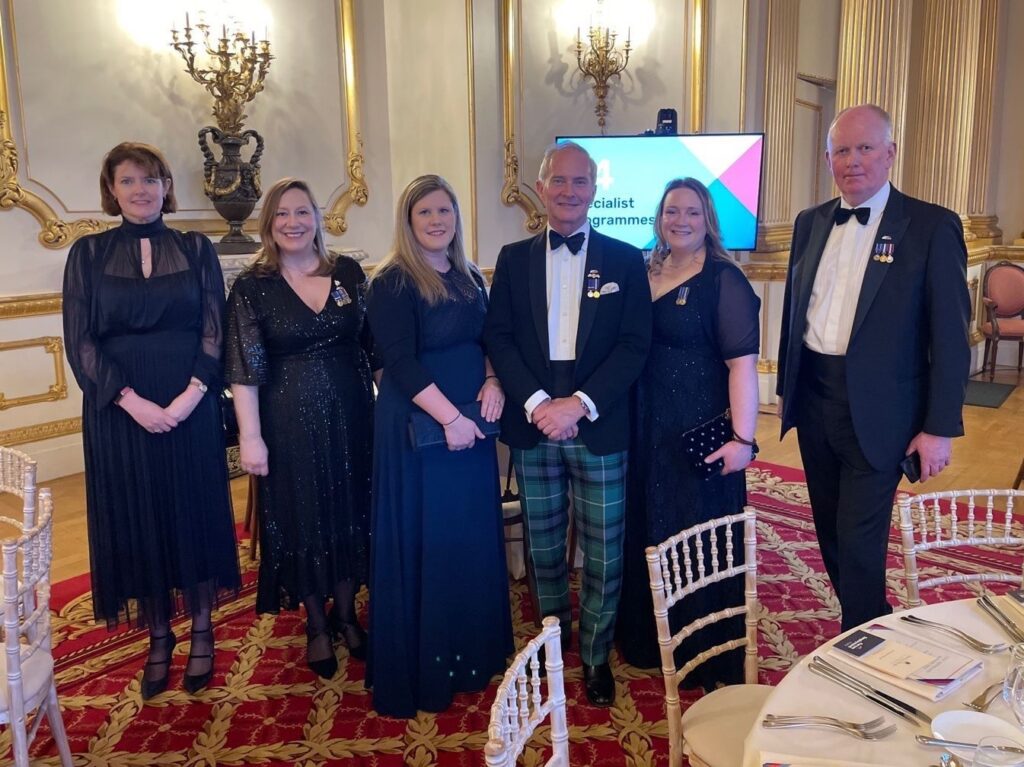
On a cool March evening this year, Lancaster House saw a return of what is becoming an annual fixture in the City calendar – the City Veterans Military Charity Dinner.

Forces Employment Chairty staff at City Veterans Military Charity Dinner 2023

The City Veterans, a non-profit Community Interest Company, was set up in 2014 by ex-military employees of domestic & US banks, consultancies and law firms to improve the transition of soldiers, sailors, airmen and marines into the workplace and coordinate fundraising for military charities.

The dinner is just one event that raises funds for military charities. On the evening, over 240 people attended to support a silent auction that featured Hurricane Fighter plane flights, SAS survival schools and ceremonial swords and raised over £100,000 for the Forces Employment Charity, this year’s chosen beneficiary.

Alistair Halliday, Chief Executive of the Forces Employment Charity, said…

“As the leading employment charity for our Armed Forces Community, we are privileged to be able to deliver the services needed to ensure veterans and their families succeed throughout their working lives. We are humbled to be chosen as the charity for this year’s City Veterans Military Charity Dinner.”


City Veterans is now an established CIC (a non-profit Community Interest Company) and runs recruiting and fundraising events with its members, supporting over a dozen different charities and raising material funds for much needed causes. They work in partnership with Veterans on Wall Street (VOWS) in the United States, the Military in Law Network (MILNet). Read more about their work online.

The Forces Employment Charity provides life-long, life-changing support, job opportunities and training to Service leavers, reservists, veterans and their families, irrespective of circumstances, rank, length of service or reason for leaving. We provide specialist employment support to enable members of the Armed Forces Community to maximise their job potential, unemployed veterans and their families to access work and, for some of the most vulnerable to get the support they need to achieve stability in their lives and are seen as natural partners for City Veterans.

Want to hear about our programmes, partnerships, events and ways that we could support you?
JOIN OUR MAILING LIST